Best Carpet & Rug Company in India
Learn how to assess the quality of the best carpet and rug company in India by looking at the quality of craftsmanship, certification, manufacturing techniques, delivery time, customization, etc.
Best Carpet & Rug Company in India: How to Actually Evaluate One
The best carpet and rug company in India is not only the one that has the largest portfolio but also the one that is able to offer clear information regarding construction quality, certifications, materials, and realistic lead time. India is among the world leaders when it comes to handmade carpet production and export. One of the Indian regions that is known for its handmade carpet manufacturing facilities is the Bhadohi-Mirzapur area of Uttar Pradesh. The real task does not only consist of locating a Bhadohi carpet manufacturer in India but rather in identifying a reliable manufacturer.
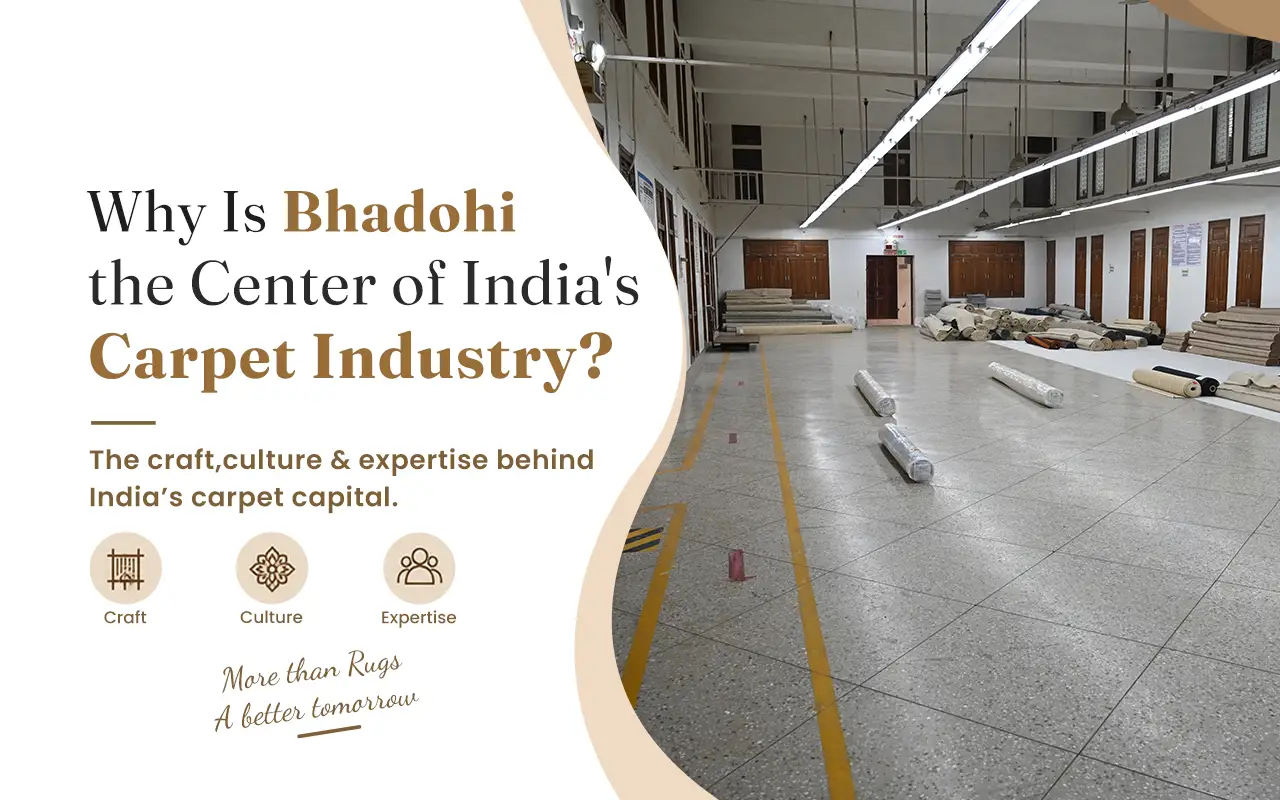
Why Is Bhadohi the Center of the Best Carpet and Rug Company in India?
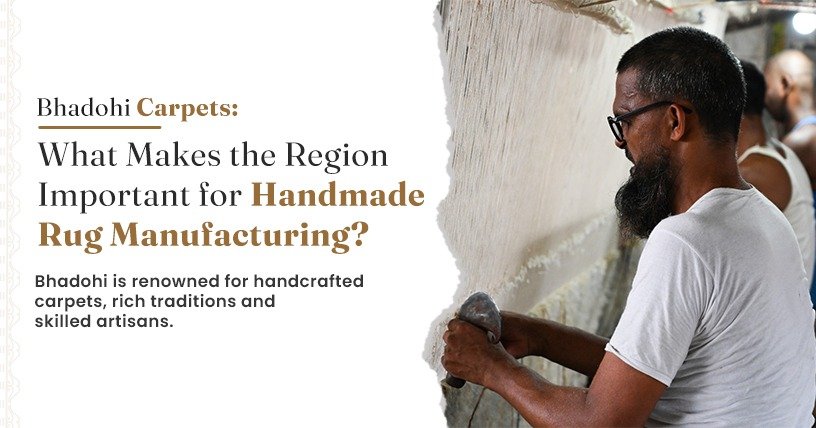
The region of Bhadohi has been a center of weaving for many years, even before the country gained independence, as the statistics show: Indian handmade carpets' export reached approximately US$1.54 billion in FY 2024–25, with the majority passing through Bhadohi and the nearby Mirzapur carpet cluster. This makes the raw materials' supply chains, dye factories, and weaving families concentrated in a small radius from each other, which is rather helpful for customers because a manufacturer in Bhadohi can employ specialist laborers (silk weavers, dyers) who specialize in one particular skill only for this particular order, while having others available year-round. The skill transfer process in practice can be seen in the work of RMC Collections.
This creates many smaller units that subcontract to each other. If the company giving you the price quote is not the company weaving your carpet, it's important to ask: "Who physically weaves this order?" Not being offensive, but completely necessary in this trade.
What Should You Actually Check Before Choosing a Manufacturer?
The area where most inexperienced consumers are usually misled is in price per square foot comparisons. Two rugs can be alike in pictures while being quite different when comparing knot counts, material, and craftsmanship. The difference is obvious when the rugs are actually placed down, but not before. Always ask for knot count in writing.
What to check | Why it matters | Red flag |
Density of knot/tuft (KPSI) | Determines durability and pattern sharpness | Will not give specific information, only states “premium quality” |
Certifications (GoodWeave, RWS, GRS) | Confirms proper labor practices and materials | Certifications listed but not verifiable on issuer's site |
Sample lead time | Demonstrates actual manufacturing capabilities | Offers same delivery time frame for sample and bulk orders |
Manufacturing method (direct vs. sub-contracting) | Ensures quality through whole manufacturing process | Vague or evasive about production location |
Fire-rating / contract compliance | Mandatory for hotels and commercial installations | Test certificates cannot be provided |
Hand-Knotted, Hand-Tufted, or Broadloom - Which Fits Your Project?
All three are always grouped, but they actually address different needs. An actual hand-knotted rug manufacturer India uses entirely different expertise and equipment from the other two methods – which is useful to know before soliciting quotes for all three.
Technique | Best for | Typical lead time | Trade-off |
Hand-knotted | Artistic pieces of heirloom quality, fine craftsmanship | 10–16 weeks | Highest price, longest lead time, most durable |
Hand-tufted | Individual designs at reasonable cost | 6–10 weeks | More rapid and cost-effective, but with shorter life than hand-knotted |
Wall-to-wall commercial and hospitality installations | 4–8 weeks (by the meter) | More efficient at scale than hand-knotted, less intricate designs |
Something to be aware of beforehand – rush orders under six weeks for hand-knotted rugs are always a red flag. It’s simply impossible to compress genuine hand-knotting without reducing the number of knots or using artificial dyes instead of natural ones – which is why an unusually short timeframe for making a "hand-knotted" rug normally indicates that something was sacrificed somewhere along the way. In particular, with regard to hospitality-scale projects, a hospitality carpet supplier India already takes into account the fire rating and volume production timeframes.
Which Certifications Actually Matter?
Not all certification icons displayed on the brand’s website hold the same level of credibility. Below are certifications that should be verified independently:
● GoodWeave – ensures there is neither child nor forced labor during manufacturing; can be verified on GoodWeave’s website using the manufacturer name
● Responsible Wool Standard (RWS) - tracks wool products from farms that meet certain animal welfare and land management standards
● Global Recycled Standard (GRS) – if specifying the recycled content of fibers is included in your sustainability requirements
● SA8000 – includes wages, working hours, and workplace safety in social accountability audits
One of the hundred-year-old Bhadohi manufacturers, known as The RMC Collection website highlights various certification requirements such as GoodWeave, RWS, GRS, SA8000, ISO, and SMETA compliance. Before making a purchase, buyers need to ensure that the certifications mentioned are valid and applicable at the time of purchase.
What Does the Custom Order Process Actually Look Like?
Consultation: include room measurements, use (home or contract), and any fire rating requirement from the start.
Design & material selection: wool, silk, bamboo silk, or mixes; drawings and/or CAD designs must be reviewed before weaving begins
Sample approval: a real-life sample needs to be sent out for approval, not a digital representation alone, before actual production
Weaving & quality control: sampled periodically throughout the process, not just at the end packaging stage
Finishing & dispatch: binding and backing (if necessary for contract purposes), and export documentation
One should expect the whole process to take 8-16 weeks for custom hand-woven rugs, less time for tufted and broadloom orders. The made-to-order process used by RMC follows this five-step procedure, which is a fair standard for any custom rug manufacturer India to follow prior to giving an estimate.
Final Thoughts
The choice of the best carpet and rugs manufacturer in India depends upon how well their quality in terms of knot count, certification, and time meets your project specifications. Always verify any claim made by manufacturers by asking for proof in written form of knot count, comparing their certifications with those in the database of the certifying organization, and requesting a sample before placing a bulk order. A carpet manufacturer who is proud of its products, whether a Bhadohi carpet manufacturer or hospitality carpets supplier in India, should not avoid answering such queries.
Questions
Frequently Asked
The Carpet City of India, namely Bhadohi, Uttar Pradesh, is the biggest carpet cluster in India in terms of production of hand-knotted carpets; other places are Kashmir (silk & wool), Jaipur (geometrical), and Agra (Mughal patterns).
Hand-knotted carpets are made by knotting threads one by one and they are durable but take longer time in their production. Hand-tufted carpets are made with a tufting gun over a backing, and thus they are produced in less time and are less expensive but less durable.
Orders which are handmade bespoke take 8–16 weeks depending on their size. Broadloom and hand-tufted orders take 4–10 weeks.
No. GoodWeave certification ensures that child and forced labor are avoided in carpet and rug manufacturing, whereas Fair Trade covers a wider range of standards in terms of trading and pricing.
Yes, but it will depend on the supplier as not all suppliers have fire ratings; you have to ask for it before manufacture as it changes the fiber and the backing and not something that is put on after manufacture.
"Best" is subjective, depending on budget, material, and delivery schedule - but in terms of a hospitality quantity order, make sure that fire ratings, quality consistency, and production control are your priorities. Contact the trade team directly for verification.